
What Research Actually Says About Sleep Training (When Parents Stay Involved)
If you've been down the late-night sleep training rabbit hole lately, you probably closed your laptop feeling way more confused than when you opened it.
One source tells you letting your baby cry is a mortal sin. Another claims you're setting yourself up for total disaster if you don't enforce a rigid schedule. Meanwhile, you're just sitting there in the dark, absolutely running on fumes, trying to figure out what's actually true.
Let's look at what the peer-reviewed research actually says—not the loud Instagram hot takes, not the passive-aggressive mom-group debates, but the actual data. And before we go any further, let's establish one thing: this isn't about pushing babies to be independent before they're ready, or leaving them to just "figure it out" alone. It's about helping them learn how to sleep while ensuring they feel completely safe, loved, and connected to you.
Babies do better with a little gentle structure.
When researchers study infant sleep, they typically teach families simple, responsive strategies—things like gradually reducing how much rocking or feeding is involved in getting a baby to sleep, or checking in with a calm, predictable presence.
When you compare those families to parents who got no guidance at all? The babies with a plan almost always come out ahead. They fall asleep faster and wake up less.
Take one well-known study that followed babies between six and twelve months. Researchers compared a few different gentle sleep approaches against a control group that just received basic parenting brochures. The babies with a structured plan fell asleep with significantly less friction and had far fewer night wakings.
But what about the emotional piece? The part that keeps you awake at night?
When researchers did long-term follow-ups with these families, the results were clear: those babies were just as securely bonded to their parents as the ones who hadn't done any sleep work. Helping a baby learn to navigate their sleep cycles didn't damage the relationship. Not even a little.
When babies sleep, you sleep. And that actually matters.
This probably isn't breaking news, but it's worth saying out loud: when sleep improves, parents start to feel like actual human beings again.
In a larger maternal health study, parents attended just a few group sessions on infant sleep and received some light follow-up support afterward. Not only did their babies' sleep improve, but the parents' mental health completely shifted. They felt less depleted, less emotionally fried, and less like they were just white-knuckling their way from one nap window to the next.
Your mental health is a massive part of this equation. Because let's be honest—a rested parent is a present parent, and that is a win for the entire household.
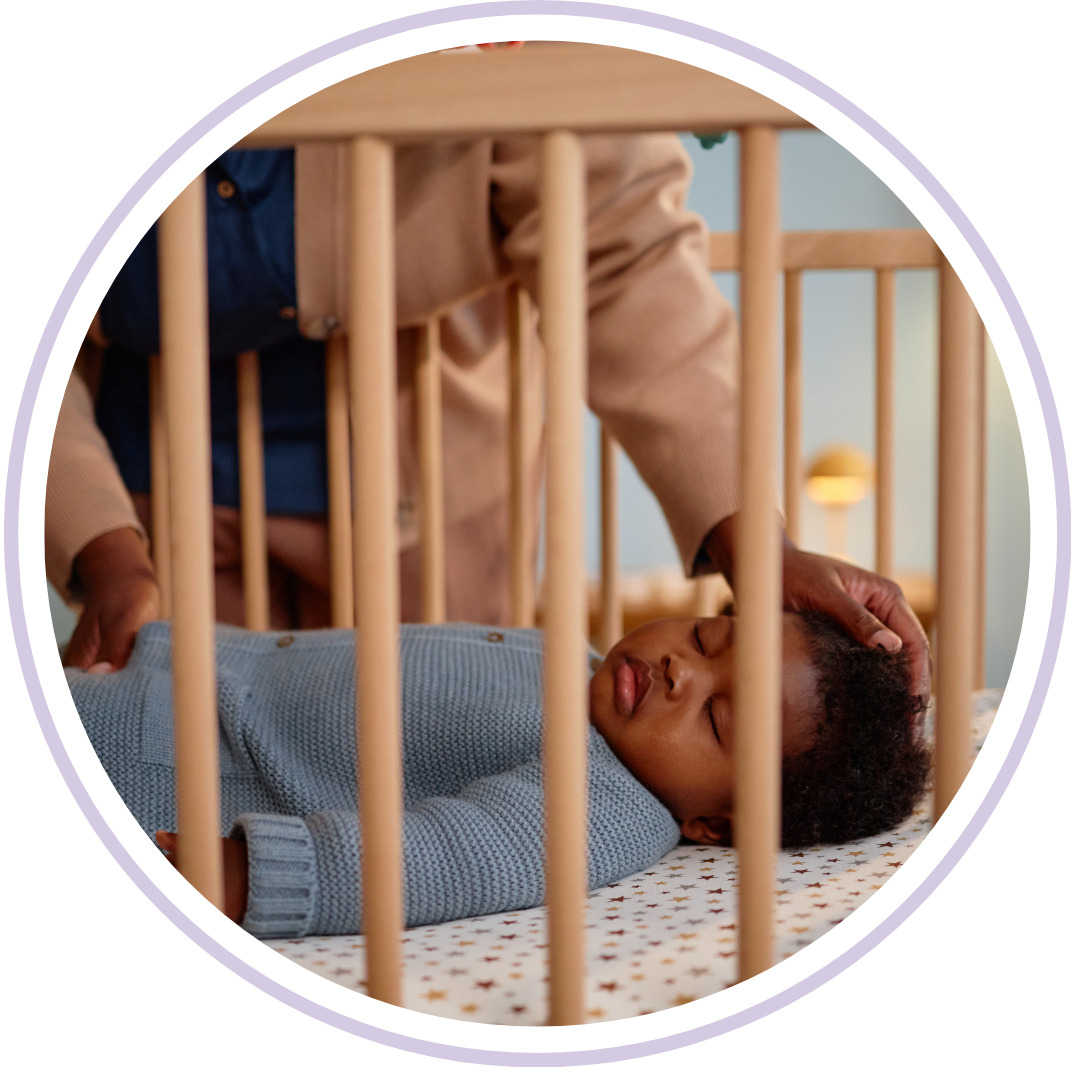
You don’t need a flawless plan. You just need direction.
Here is the coolest part of the data: some studies didn’t even look at intensive, multi-week sleep programs. They literally just gave parents a quick 15-minute lesson on what normal infant sleep biology actually looks like.
And even that made a difference. Babies slept longer, and night wakings dropped.
What that tells us is that confidence and clarity go an incredibly long way. When you actually understand what's happening beneath the surface and you have a loose roadmap, the vibe of the whole night changes. You don't need to be perfect; you just need to not be flying completely blind.
"But will this hurt my baby emotionally?"
This is the big question that keeps so many parents frozen, and honestly, it makes complete sense. You're not just trying to get some rest—you're trying to make sure you're not messing up your kid in the process.
Researchers have actually followed families for years after sleep coaching to check on this. One study tracked children all the way into their preschool years, examining everything from behavior and emotional regulation to the parent-child bond and overall family dynamics.
The result? They found zero long-term harm or negative behavioral issues connected to sleep training.
Look, that doesn't mean every single method is right for every single family. It's not. But the blanket internet narrative that structured sleep support causes permanent emotional damage? The science just doesn't back it up.

You still matter at bedtime—a lot.
Sleep isn't only about what happens when your baby stirs at 2:00 AM. It's about your entire daytime and evening approach—the rhythm, the connection, and the deep, instinctual feeling your baby gets that you are predictable, safe, and steady.
In fact, studies show that simply implementing a consistent bedtime routine and getting both parents involved can significantly reduce night wakings and bedtime resistance all on its own.
It’s never about stepping back or tuning out. It’s about showing up in a calm, confident way your baby can genuinely count on.
The bottom line
If we look at the raw data, here is what we know for sure:
Gentle, structured sleep support helps babies sleep better.
It helps parents feel less anxious and deeply depleted.
Long-term emotional harm simply hasn't shown up in well-designed research.
Even basic education about sleep biology can shift the nights.
You do not have to choose between your baby's emotional wellbeing and your own biological need for rest. With the right kind of responsive support, both are completely possible.
So if you are in the thick of it right now—exhausted, second-guessing every single boundary, and frantically Googling at 3:00 AM—take a breath. You are not doing anything wrong. You are just trying to take care of your baby and take care of yourself at the exact same time. That’s not selfish. That is just what parenting actually looks like.