
Daylight Saving Time and Baby Sleep: How to Help Your Little One Fall Back
Every fall, my inbox fills up with the same message. "We were so excited about the extra hour of sleep, and then our baby was up at 5 AM." If that's you, I promise you're not the only one standing in a dark kitchen at 5:15, wondering what happened.
I've helped a lot of families through the daylight saving time change, and I can tell you it's very fixable. Babies and toddlers just need a little help getting their body clocks to catch up.
How does daylight saving time affect baby sleep?
Your baby has no idea what the clock on the wall says. Their body runs on light, routine, and habit. So when we turn the clocks back, a 7:00 bedtime suddenly feels like 8:00 to them, and the 6:30 wake-up you've been getting shows up at 5:30. Nothing is wrong with your child. Their body just hasn't heard the news yet.
How to adjust baby sleep for daylight saving time
I usually give families two choices, and both have worked for me. Which one fits depends mostly on your child's personality.
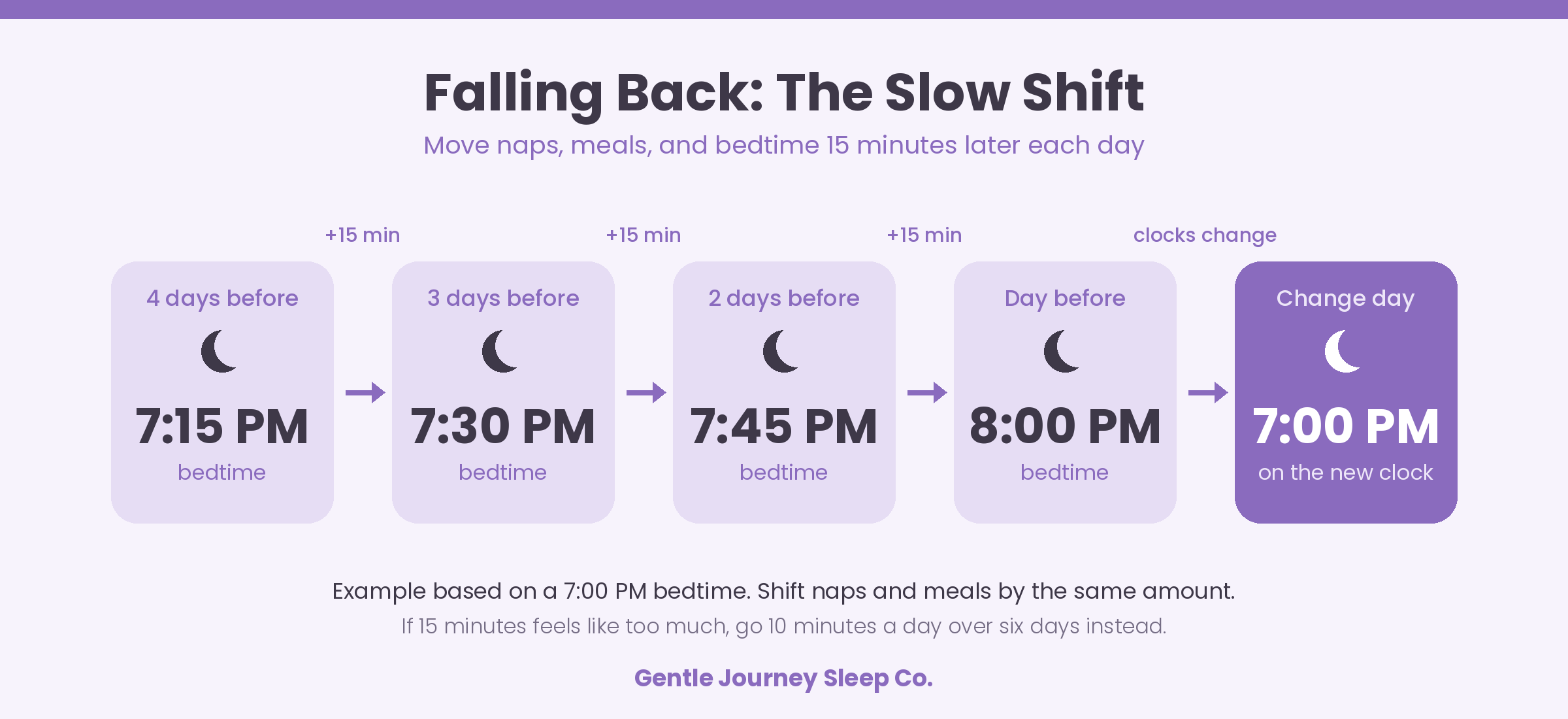
The first is the slow shift. I use this one for babies and toddlers who are sensitive to change or already wake early. Starting four days before the clocks change, push naps, meals, and bedtime 15 minutes later each day. By the time the clocks move, your child is almost on the new schedule without really noticing. With a regular 7:00 bedtime, that looks like 7:15, then 7:30, then 7:45, then 8:00 the night before. After the change, bedtime goes right back to 7:00 on the new clock. Move naps and meals by the same amount. If 15 minutes feels like a lot for your little one, stretch it out by 10 minutes a day for six days.
The second is to switch on the day. You just start using the new clock the morning of the change, with naps, meals, and bedtime all at their new times. I see this work well for easygoing kids who aren't early risers by nature. Plan on a few crabby days while their body catches up, and hold the schedule steady.
What helps your child adjust, whichever way you go
Light does most of the heavy lifting. Open the curtains first thing and get outside early in the day if you can. In the evening, dim the lights about an hour before bed and keep the bedroom dark. It gets dark sooner now anyway, so you've got that working in your favor.
Keep the routine boring and the same. Same bath, same books, same words. When the clock is off, the routine is what tells their body bedtime is coming.
If your child wakes at 5:30, don't treat it as morning. Keep the room dark, keep your voice low, and keep things dull. I know it's tempting to give up and start the day. The kids who get a calm, boring response tend to figure it out faster. For toddlers, a clock that lights up when it's okay to get up can help a lot.
Watch the naps, too. If they get short or messy during the change, an earlier bedtime for a night or two keeps the tiredness from piling up.
The one thing I tell every parent
Don't stack changes on top of the time change. This is not the week to drop a nap, start sleep training, or move into a big-kid bed. I've seen well-meaning families try to fix everything at once, and it almost always makes the whole thing feel harder. Let the clocks settle, then tackle the next thing. A child who's already on a steady schedule going in nearly always adjusts faster, so a solid routine really does pay off.
How long does it take a baby to adjust to daylight saving time?
Some kids are back to normal in a couple of days. Others need closer to a week. Stay consistent and give it time. A few off days are normal, and they don't erase the good habits you've built.
When to get help with your child's sleep
If your child's schedule is still off after a week or two, or the early wakings aren't easing up, there's usually something else in the mix. It might be the schedule, a sleep habit, or the room itself. That's the kind of thing I help families sort out every day. I look at your child's schedule, feedings, development, and temperament, and we build a plan that actually fits your family. Book a free discovery call HERE, and we'll figure out your next step together.